
Rehabilitation Equipment Supply Solution for a European Medical Device Distributor
A Europe-based medical device distributor was looking for a reliable Chinese factory to support its rehabilitation product line, including manual wheelchairs, electric wheelchairs, walkers, crutches, and hospital beds. Instead of choosing products only from a catalog, the client needed a supplier who could help with model selection, sample testing, documentation, packaging, and long-term supply planning for their local market.
A European Distributor Needed More Than a Product Supplier
The client was an established medical device distributor serving hospitals, rehabilitation centers, elderly care facilities, and local mobility equipment stores in Europe.
Before contacting us, they had worked with several suppliers, but the cooperation was not stable enough. Some products had inconsistent quality, some suppliers could not support mixed-category orders, and communication became difficult when the client needed product adjustments, spare parts, or shipping documents.
For this project, the client wanted to build a more reliable product supply system instead of placing a one-time order. Their goal was to select suitable models, test samples, prepare product information for local sales, and gradually expand the product range based on market feedback.
How We Helped the Distributor Build a Practical Product Line
01. Product Range Planning
The client did not want to purchase only one product. They needed a complete rehabilitation equipment line that could cover different customer groups, from basic mobility support to more advanced patient care needs.
We helped them compare manual wheelchairs, electric wheelchairs, walking aids, crutches, and hospital beds based on usage scenarios, price range, loading capacity, packaging volume, and expected local demand.
02. Sample Testing Before Bulk Order
Before confirming a larger order, the client requested samples for several key models. Their team checked product structure, comfort, folding function, controller operation, battery information, packaging strength, and user instructions.
Based on their feedback, we adjusted several product details, including configuration options, labeling, accessories, and packaging requirements.
03. Factory-Direct Production and Delivery Support
After the product list was confirmed, we arranged production, quality inspection, spare parts preparation, export documents, and shipment coordination.
The client was able to start with a controlled first order and then plan future replenishment based on sales performance in their local market.
From First Inquiry to Local Market Launch
This project was not completed through a simple price quotation. It went through product comparison, sample evaluation, configuration adjustment, production follow-up, and delivery preparation before the client introduced the products to their local sales channels.
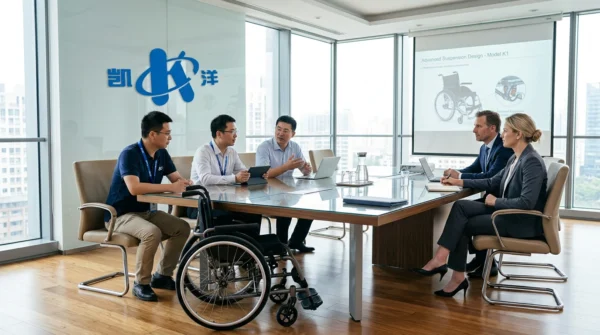
Initial Product Discussion
The client first shared their target market, main customer groups, preferred price range, and the product categories they wanted to expand. Our sales and product team reviewed their requirements and recommended several suitable models for hospitals, rehabilitation stores, elderly care suppliers, and homecare users.
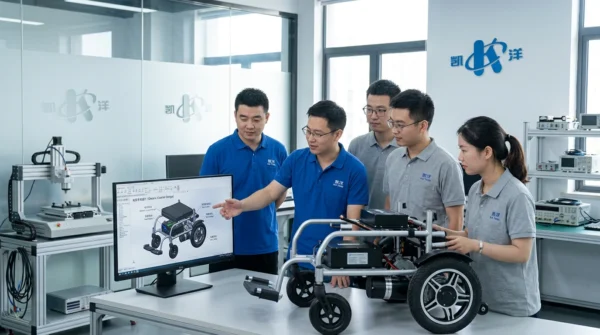
Sample Selection and Configuration Review
After the first discussion, the client selected sample models for testing. They paid special attention to product stability, folding structure, motor performance, battery information, comfort, spare parts, and user manuals.We provided product details, pictures, videos, packing information, and available customization options to help them make a practical decision.

Factory Production and Quality Follow-Up
Once the order was confirmed, we followed the production schedule closely and checked key points before shipment, including frame structure, wheels, brakes, controllers, motors, surface finishing, packaging, and accessories.The client received production updates and inspection photos during the process, which helped reduce uncertainty before overseas shipment.
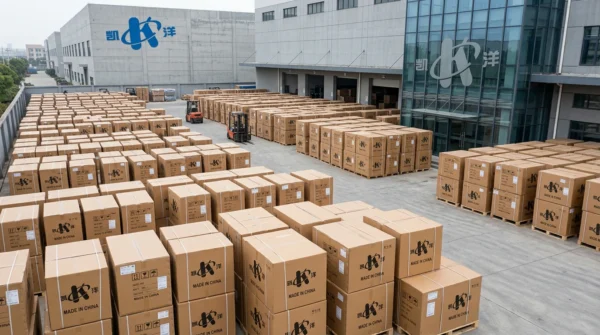
Delivery Preparation and Market Feedback
Before shipment, we supported the client with packing details, product information, spare parts suggestions, and export documentation.After the products arrived, the client introduced them to selected local channels first. Based on early feedback, they planned to expand the order to more rehabilitation equipment categories.
How We Reduced Purchasing Risks for the Distributor
For overseas distributors, the biggest concern is not only the product price. They also need stable quality, clear communication, suitable product matching, safe packaging, necessary documents, and reliable after-sales support.
Concern 01: Too Many Product Categories to Compare
Concern:
The client needed manual wheelchairs, electric wheelchairs, walkers, crutches, and hospital beds, but it was difficult to compare all models only through catalogs. They were concerned about choosing products that might not match their local market.
Solution:
We helped divide the products by usage scenario, price level, function, and target customer group. Instead of pushing every model, we recommended a more practical product mix for their first order, making the purchasing decision easier and more controlled.
Concern 02: Whether Product Details Could Meet Local Market Needs
Concern:
The client needed products suitable for European users and local sales channels. They were concerned about comfort, appearance, user instructions, spare parts, packaging, and configuration options.
Solution:
We discussed model details one by one, including seat width, frame structure, folding method, controller position, wheel type, battery information, accessories, and packaging. For selected models, we provided adjustment options to better match their local market needs.
Concern 02: Whether Product Details Could Meet Local Market Needs
Concern:
The client was not only placing a trial order. They wanted a supplier who could support future repeat orders with stable quality. Their biggest worry was that sample quality and bulk order quality might be different.
Solution:
We followed the same production and inspection standards from sample confirmation to bulk production. Key parts, assembly details, function testing, packaging, and shipment preparation were checked before delivery to help the client maintain confidence in repeated purchasing.
Concern 04: Overseas Shipping, Documents, and After-Sales Support
Concern:
For a distributor, delivery is only one part of the project. They also needed product information, packing details, spare parts suggestions, and communication support after the products arrived.
Concern:
For a distributor, delivery is only one part of the project. They also needed product information, packing details, spare parts suggestions, and communication support after the products arrived.
Looking for a Reliable Rehabilitation Equipment Factory Partner?
Whether you are a medical device distributor, importer, rehabilitation center, hospital supplier, or mobility equipment dealer, Kaiyang Medical can support your product selection, sample testing, customization, production, and long-term supply needs.
Electric Wheelchair Supply Solution for a Middle East Rehabilitation Center
A rehabilitation center in the Middle East was looking for electric wheelchairs that could support daily patient mobility, caregiver operation, and long-term clinical use.Their main concerns were not only product appearance or price. They needed safe driving performance, stable weight capacity, easy operation for patients, reliable battery performance, and clear after-sales training for their medical and maintenance teams.
A Rehabilitation Center Needed Safer and More Reliable Electric Wheelchairs
The client was a rehabilitation center serving patients with limited mobility, elderly users, and post-treatment recovery needs. Their existing mobility equipment could meet basic transportation requirements, but it was not ideal for long-term daily use inside the facility.
For this project, the client wanted electric wheelchairs that could provide stable movement, comfortable seating, simple operation, and reliable safety protection. Their team also needed clear instructions for caregivers, maintenance staff, and daily operators.
Before confirming the order, the client paid close attention to several details, including weight capacity, braking performance, anti-tip design, controller sensitivity, battery safety, turning radius, seat comfort, and spare parts support.
How We Helped the Center Select Safer Electric Wheelchair Models
01. Safety-Focused Model Selection
The client needed electric wheelchairs for patients with different mobility conditions. Some users required basic indoor movement, while others needed stronger stability, higher load capacity, and easier caregiver assistance.
We helped the client compare different electric wheelchair models based on frame structure, motor performance, braking system, anti-tip wheels, seat width, controller type, battery configuration, and daily usage environment.
02. Weight Capacity and Stability Review
Because the wheelchairs would be used by different patient groups, the client was very concerned about loading capacity and overall stability.
We recommended suitable models according to expected user weight, indoor corridor width, ramp usage, turning space, and caregiver operation needs. For selected models, we provided detailed product information, videos, and packing data before sample confirmation.
03. Patient Experience and Staff Training Support
The client wanted products that were safe but also easy to use. Their medical staff needed to understand how to operate, charge, clean, inspect, and maintain the wheelchairs during daily use.
We supported the project with operation guidance, product videos, maintenance suggestions, spare parts recommendations, and remote communication to help their team use the products more confidently after delivery.
From Safety Review to Daily Patient Use
This project was focused on practical clinical use. The client needed to confirm that the electric wheelchairs were safe, comfortable, easy to operate, and suitable for repeated daily use in a rehabilitation environment.
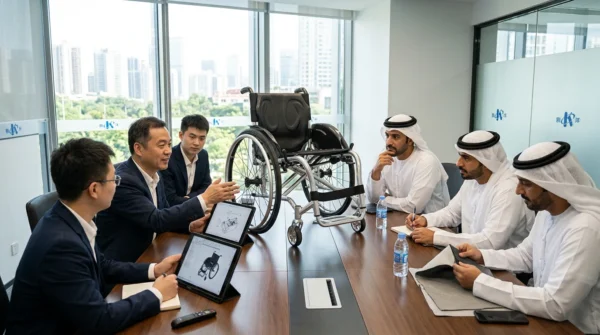
Requirement Review
The client first shared their main use scenarios, including patient movement inside the rehabilitation center, caregiver-assisted operation, short-distance outdoor transfer, and daily use by elderly patients.Our team reviewed their requirements and helped narrow down suitable electric wheelchair models based on safety, comfort, weight capacity, battery performance, and ease of operation.
Safety and Load Capacity Evaluation
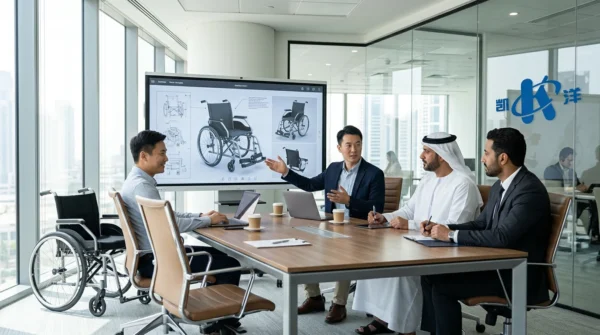
Before confirming the models, the client asked detailed questions about frame strength, braking response, anti-tip protection, controller sensitivity, maximum loading capacity, and stability on ramps or uneven surfaces.We provided product specifications, videos, detailed photos, and configuration options to help their purchasing and technical teams evaluate the models more clearly.
Sample Testing and Feedback
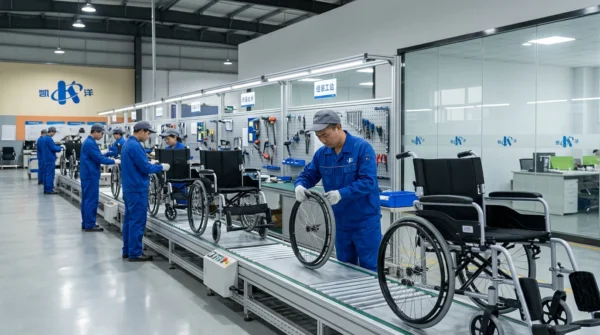
The client arranged sample testing before placing a larger order. Their team checked seat comfort, driving smoothness, turning radius, battery charging, joystick operation, brake performance, and caregiver handling.Based on their feedback, we adjusted several details, including accessory options, user guidance materials, packaging requirements, and spare parts recommendations.
Delivery and Training Support
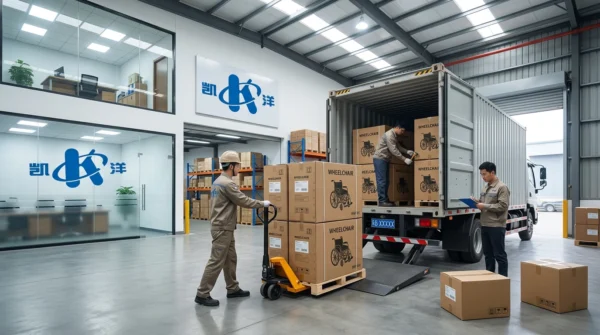
After the order was confirmed, we followed the production and inspection process closely. Before shipment, we checked key components, packaging, accessories, and product documentation.After delivery, we continued to support the client with operation videos, maintenance guidance, spare parts suggestions, and after-sales communication to help their staff use the wheelchairs safely in daily patient care.
How We Reduced Safety and Operation Concerns for the Client
For a rehabilitation center or hospital, electric wheelchairs are not just mobility products. They are used by real patients every day, so safety, comfort, reliability, and staff training are all important parts of the purchasing decision.
Concern 01: Whether the Electric Wheelchairs Were Safe Enough for Patients
Concern:
The client was concerned about daily patient safety, especially when the wheelchair was used by elderly patients or users with limited hand control. They needed stable movement, responsive braking, anti-tip protection, and simple operation.
Solution:
We helped the client review safety-related details such as brake system, controller operation, anti-tip wheels, frame structure, turning radius, and speed control. We also provided product videos and operation guidance so their team could better understand the wheelchair before purchase.
Concern 02: Weight Capacity and Long-Term Stability
Concern:
The rehabilitation center served different patient groups, so they needed electric wheelchairs that could support users with different body weights while remaining stable during daily use.
Solution:
We recommended models with suitable load capacity and stronger structural support according to the client’s usage scenarios. We also helped them compare seat width, frame design, motor configuration, wheel structure, and ramp-use requirements before final model selection.
Concern 03: Patient Comfort and User Experience
Concern:
The client did not want a wheelchair that only looked strong. They needed products that patients could sit in comfortably and operate with confidence during daily rehabilitation or movement inside the facility.
Solution:
We reviewed details such as seat size, backrest support, armrest design, footrest structure, joystick position, driving smoothness, and turning space. This helped the client choose models that were more suitable for patient comfort and caregiver operation.
Concern 04: After-Sales Training and Maintenance Support
Concern:
The client’s medical and maintenance teams needed to know how to charge, operate, inspect, clean, and maintain the electric wheelchairs after delivery. They were concerned that staff would not have enough product knowledge for daily use.
Solution:
We provided operation guidance, product videos, maintenance suggestions, spare parts recommendations, and remote after-sales communication. This helped the client train their staff and manage the wheelchairs more confidently after the products arrived.
Need a Safer Electric Wheelchair Solution for Your Facility?
Whether you manage a rehabilitation center, hospital, elderly care facility, or patient mobility program, Kaiyang Medical can support your electric wheelchair selection, safety review, sample testing, staff training, and long-term supply needs.
Mobility Equipment Supply Solution for a Latin American Elderly Care Group
An elderly care group in Latin America was looking for cost-effective and durable mobility equipment for multiple care facilities, including manual wheelchairs, walkers, crutches, and patient support products.The client needed more than a low price. They wanted products that could withstand frequent daily use, reduce maintenance pressure, fit their purchasing budget, and arrive safely after long-distance sea transportation.
An Elderly Care Group Needed Durable Products Within a Controlled Budget
The client managed several elderly care facilities and needed to replace part of their mobility equipment. Their existing products had been used for a long time, and some wheelchairs, walkers, and crutches were no longer stable enough for daily care work.
Because the products would be used frequently by elderly residents and caregivers, the client paid close attention to durability, safety, spare parts, and maintenance cost. At the same time, they had a clear purchasing budget and needed to balance product quality with total order cost.
Before confirming the order, the client wanted to compare different product grades, understand packaging methods, check container loading efficiency, and make sure the products could arrive safely after long-distance shipping.
How We Helped the Client Balance Cost, Durability, and Bulk Purchasing
01. Budget-Based Product Matching
The client did not want the cheapest products, but they needed a practical solution that matched their budget. We helped them compare different models by structure, material, function, price level, and expected usage frequency.
For daily elderly care use, we recommended a balanced product mix instead of only high-end models. This helped the client control the total purchasing cost while still meeting the basic requirements for comfort, stability, and durability.
02. Durability Review for Daily Facility Use
The products would be used repeatedly by residents and caregivers, so durability was one of the client’s biggest concerns.
We helped review key details such as wheelchair frame structure, seat material, wheel quality, brake design, walker stability, crutch strength, and replaceable parts. For selected models, we provided product photos, videos, specifications, and packing details before order confirmation.
From Budget Planning to Bulk Delivery
This project was focused on practical purchasing. The client needed to control budget, compare durability, confirm packaging safety, and arrange a bulk order that could support several elderly care facilities at the same time.

Budget and Product List Review
The client first shared their target budget, required product categories, estimated quantity, and main use scenarios inside elderly care facilities.Our team helped them organize a practical product list, including manual wheelchairs, walkers, crutches, and other basic mobility support products suitable for daily elderly care use.

Model Comparison and Durability Check
The client compared several models before confirming the final selection. They were especially concerned about frame strength, wheel quality, brake stability, seat material, folding structure, and ease of caregiver operation.We provided detailed product information, photos, videos, and specifications to help them choose models that could meet daily use requirements without exceeding their budget.
Bulk Order Confirmation
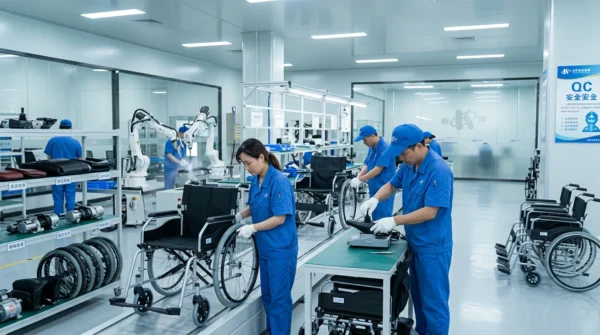
After the product mix was confirmed, the client placed a bulk order based on the needs of different care facilities.We helped arrange the production schedule, confirm product quantities, prepare spare parts suggestions, and check key product details before shipment to reduce uncertainty during the purchasing process.
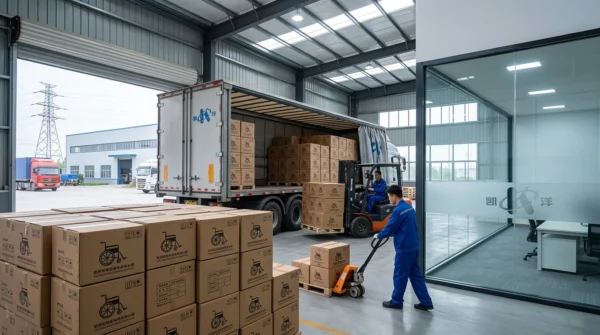
Packaging and Shipment Support
Because the products needed to travel by sea over a long distance, the client paid close attention to packaging safety and container loading.We supported the client with reinforced packaging suggestions, packing photos, loading information, export documents, and shipment follow-up to help the products arrive safely and be distributed smoothly to their facilities.
How We Helped the Client Control Cost and Reduce Purchasing Risks
For elderly care institutions, purchasing mobility equipment is not only about unit price. The client also needed to consider product lifespan, maintenance pressure, transportation damage, storage space, and the real cost of long-term daily use.
Concern 01: Limited Budget for Multiple Facilities
Concern:
The client needed to purchase equipment for several elderly care facilities at the same time. Their budget was limited, so they could not choose only high-end models for every product category.
Solution:
We helped the client divide the product list into different usage levels. For frequently used products, we recommended stronger and more durable models. For basic backup products, we selected more cost-effective options. This helped the client control the total budget while keeping the product mix practical.
Concern 02: Whether the Products Were Durable Enough for Daily Use
Concern:
The products would be used every day by elderly residents and caregivers. The client was worried that low-cost products might break easily, increase maintenance work, or create safety problems during use.
Solution:
We helped review important durability details, including wheelchair frame structure, seat material, wheel quality, brake design, walker stability, crutch strength, and replaceable parts. The final product selection focused on practical daily use instead of only the lowest price.
Concern 03: Risk of Damage During Long-Distance Shipping
Concern:
The client was concerned that wheelchairs, walkers, and other mobility products could be damaged during long-distance sea transportation, especially when different product categories were shipped together.
Solution:
We discussed packaging strength, carton structure, product protection, loading method, and mixed-product shipment planning. Before shipment, we provided packing photos and loading information so the client could better understand how the goods were protected.
Concern 04: Managing Bulk Orders and Future Replenishment
Concern:
The client did not want to place a large order without a clear follow-up plan. They needed to know which products were suitable for first purchase, which items should be stocked as spare products, and how to plan future replenishment.
Solution:
We helped the client start with a controlled product mix based on facility needs and usage frequency. We also provided spare parts suggestions and product information to support future repeat orders and easier equipment management.
Need Durable Mobility Equipment for Elderly Care Facilities?
Whether you manage an elderly care group, nursing home, rehabilitation facility, or healthcare purchasing program, Kaiyang Medical can support your budget planning, model selection, bulk purchasing, packaging, and long-term supply needs.
Mixed-Container Supply Solution for a Southeast Asian Medical Equipment Importer
A medical equipment importer in Southeast Asia wanted to expand its rehabilitation product range with manual wheelchairs, crutches, walkers, and basic mobility aids.Instead of placing a large order for only one product, the client needed a flexible mixed-container solution with reasonable MOQ, stable lead time, clear packing information, and reliable factory support for repeated orders.
An Importer Needed Flexible MOQ and Mixed-Product Purchasing
The client was a medical equipment importer supplying local dealers, clinics, pharmacies, and rehabilitation product stores in Southeast Asia.
Their market demand was diverse, but each single product category did not require a very large quantity at the beginning. For this reason, the client did not want to purchase only one model in high volume. They needed a mixed order that could include manual wheelchairs, crutches, walkers, and other mobility aids in one shipment.
Before confirming the order, the client was mainly concerned about MOQ, product combination, carton quantity, container loading, production lead time, and whether future repeat orders could be arranged smoothly.
How We Helped the Importer Build a Flexible Mixed-Container Order
01. Flexible Product Combination
The client wanted to test different product categories in their local market before increasing order volume. We helped them combine manual wheelchairs, crutches, walkers, and selected mobility aids into one practical order plan.
Instead of requiring a large quantity for each single item, we discussed a more flexible product mix based on their sales channels, storage capacity, budget, and expected demand.
02. MOQ and Quantity Planning
MOQ was one of the client’s biggest concerns. They needed enough quantity to control unit cost, but they also wanted to avoid overstocking slow-moving products.
We helped review each product category and suggested a reasonable starting quantity. For fast-moving items such as standard manual wheelchairs and basic crutches, the client prepared more stock. For new items such as walkers and selected mobility aids, they started with smaller trial quantities.
03. Lead Time and Shipment Coordination
Because the client supplied different local channels, stable delivery was very important. They needed to know when production could be completed and how the mixed products would be packed and shipped together.
We supported the client with production scheduling, packing details, carton information, container loading suggestions, and shipment follow-up, helping them receive the mixed order in a more organized way.
From Product Combination to Mixed-Container Shipment
This project was not a single-product bulk order. The client needed a flexible purchasing plan that combined several rehabilitation product categories, controlled MOQ, matched their market demand, and kept delivery manageable.
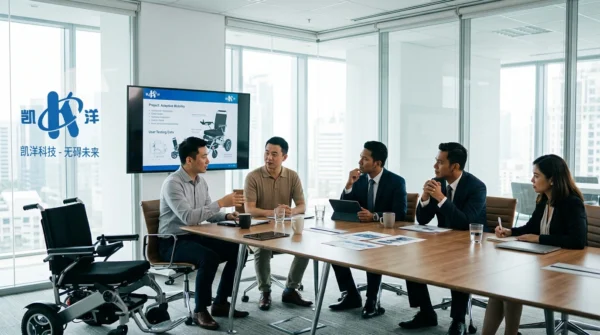
Product Category Selection
The client first shared the product categories they wanted to import, including manual wheelchairs, crutches, walkers, and basic mobility aids.Our team helped them compare suitable models based on local demand, price range, packing volume, and expected sales channels.
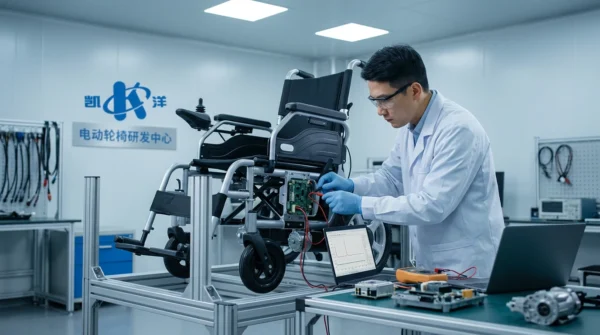
MOQ and Quantity Discussion
The client did not want a high MOQ for every single product. They needed a mixed order that allowed them to test different categories without creating too much inventory pressure.We helped them plan a reasonable quantity for each item, balancing trial demand, container space, unit cost, and future replenishment.
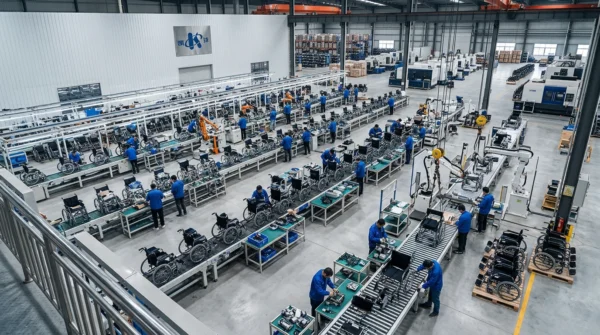
Packing and Loading Planning
Because the order included different products, the client needed clear packing information before shipment.We provided carton size, packing quantity, product photos, and loading suggestions to help the client understand how manual wheelchairs, crutches, walkers, and other products would be arranged in one shipment.
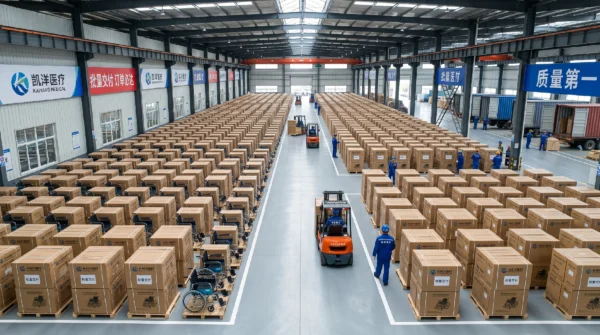
Production and Delivery Follow-Up
After the order was confirmed, we followed the production schedule for different product categories and coordinated shipment preparation.The client received updates on production progress, packing status, and delivery arrangement, making it easier for them to plan local distribution after the goods arrived.
How We Made Mixed-Product Purchasing Easier for the Importer
For medical equipment importers, purchasing different rehabilitation products from one factory can reduce communication cost, simplify shipment planning, and make inventory management more flexible. The key is to control MOQ, product mix, lead time, and packing details from the beginning.
Concern 01: High MOQ for Each Product Category
Concern:
The client wanted to import several product categories, but they were worried that each model would require a high MOQ. This could create inventory pressure and increase purchasing risk, especially for new products that had not yet been tested in their local market.
Solution:
We helped the client create a mixed-product order plan. For core products with stable demand, we suggested larger quantities. For new or trial products, we helped keep the quantity more controlled, making the first shipment more flexible and practical.
Concern 02: How to Combine Manual Wheelchairs, Crutches, and Walkers
Concern:
The client was unsure how to combine different products in one order. Manual wheelchairs took more space, while crutches and walkers had different packing sizes and selling speeds.
Solution:
We reviewed the product list together and helped the client arrange a more balanced mix. The final order included manual wheelchairs as the main product, with crutches, walkers, and selected mobility aids added to enrich their product range and improve container space use.
Concern 03: Whether the Lead Time Could Be Controlled
Concern:
Because the order included several product categories, the client was concerned that production timing might become difficult to manage. If one product was delayed, the whole shipment could be affected.
Solution:
We checked the production schedule for each category before order confirmation and coordinated the production plan after the order was placed. During the process, we provided updates on production progress and packing preparation to help the client manage expectations.
Concern 04: Packing, Container Loading, and Local Distribution
Concern:
The client needed clear packing information because the goods would be distributed to different local channels after arrival. They wanted to avoid confusion during unloading, warehouse sorting, and local delivery.
Solution:
We supported the client with carton information, packing photos, product labels, loading suggestions, and shipment documents. This made the mixed shipment easier to check, receive, and distribute after arrival.
Need a Flexible Mixed-Container Supply Plan?
Whether you are a medical equipment importer, local distributor, clinic supplier, pharmacy channel, or rehabilitation product dealer, Kaiyang Medical can support your mixed-product order, MOQ planning, packing arrangement, production follow-up, and long-term supply needs.