
Electric Wheelchair Supply Solution for a Middle East Rehabilitation Center
A rehabilitation center in the Middle East was looking for electric wheelchairs that could support daily patient mobility, caregiver operation, and long-term clinical use.Their main concerns were not only product appearance or price. They needed safe driving performance, stable weight capacity, easy operation for patients, reliable battery performance, and clear after-sales training for their medical and maintenance teams.
A Rehabilitation Center Needed Safer and More Reliable Electric Wheelchairs
The client was a rehabilitation center serving patients with limited mobility, elderly users, and post-treatment recovery needs. Their existing mobility equipment could meet basic transportation requirements, but it was not ideal for long-term daily use inside the facility.
For this project, the client wanted electric wheelchairs that could provide stable movement, comfortable seating, simple operation, and reliable safety protection. Their team also needed clear instructions for caregivers, maintenance staff, and daily operators.
Before confirming the order, the client paid close attention to several details, including weight capacity, braking performance, anti-tip design, controller sensitivity, battery safety, turning radius, seat comfort, and spare parts support.
How We Helped the Center Select Safer Electric Wheelchair Models
01. Safety-Focused Model Selection
The client needed electric wheelchairs for patients with different mobility conditions. Some users required basic indoor movement, while others needed stronger stability, higher load capacity, and easier caregiver assistance.
We helped the client compare different electric wheelchair models based on frame structure, motor performance, braking system, anti-tip wheels, seat width, controller type, battery configuration, and daily usage environment.
02. Weight Capacity and Stability Review
Because the wheelchairs would be used by different patient groups, the client was very concerned about loading capacity and overall stability.
We recommended suitable models according to expected user weight, indoor corridor width, ramp usage, turning space, and caregiver operation needs. For selected models, we provided detailed product information, videos, and packing data before sample confirmation.
03. Patient Experience and Staff Training Support
The client wanted products that were safe but also easy to use. Their medical staff needed to understand how to operate, charge, clean, inspect, and maintain the wheelchairs during daily use.
We supported the project with operation guidance, product videos, maintenance suggestions, spare parts recommendations, and remote communication to help their team use the products more confidently after delivery.
From Safety Review to Daily Patient Use
This project was focused on practical clinical use. The client needed to confirm that the electric wheelchairs were safe, comfortable, easy to operate, and suitable for repeated daily use in a rehabilitation environment.
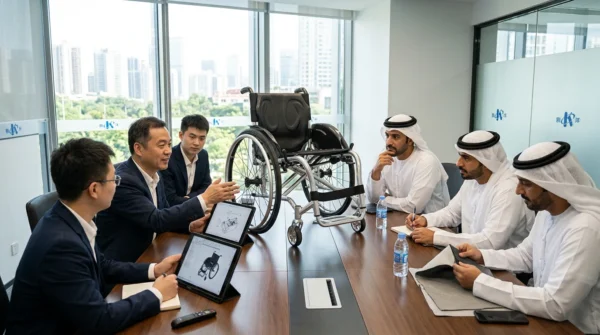
Requirement Review
The client first shared their main use scenarios, including patient movement inside the rehabilitation center, caregiver-assisted operation, short-distance outdoor transfer, and daily use by elderly patients.Our team reviewed their requirements and helped narrow down suitable electric wheelchair models based on safety, comfort, weight capacity, battery performance, and ease of operation.

Safety and Load Capacity Evaluation
Before confirming the models, the client asked detailed questions about frame strength, braking response, anti-tip protection, controller sensitivity, maximum loading capacity, and stability on ramps or uneven surfaces.We provided product specifications, videos, detailed photos, and configuration options to help their purchasing and technical teams evaluate the models more clearly.
Sample Testing and Feedback
The client arranged sample testing before placing a larger order. Their team checked seat comfort, driving smoothness, turning radius, battery charging, joystick operation, brake performance, and caregiver handling.Based on their feedback, we adjusted several details, including accessory options, user guidance materials, packaging requirements, and spare parts recommendations.

Delivery and Training Support
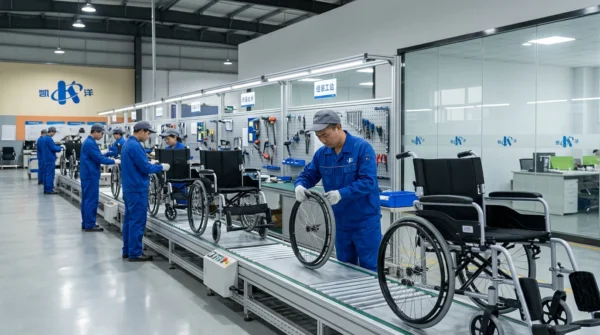
After the order was confirmed, we followed the production and inspection process closely. Before shipment, we checked key components, packaging, accessories, and product documentation.After delivery, we continued to support the client with operation videos, maintenance guidance, spare parts suggestions, and after-sales communication to help their staff use the wheelchairs safely in daily patient care.
How We Reduced Safety and Operation Concerns for the Client
For a rehabilitation center or hospital, electric wheelchairs are not just mobility products. They are used by real patients every day, so safety, comfort, reliability, and staff training are all important parts of the purchasing decision.
Concern 01: Whether the Electric Wheelchairs Were Safe Enough for Patients
Concern:
The client was concerned about daily patient safety, especially when the wheelchair was used by elderly patients or users with limited hand control. They needed stable movement, responsive braking, anti-tip protection, and simple operation.
Solution:
We helped the client review safety-related details such as brake system, controller operation, anti-tip wheels, frame structure, turning radius, and speed control. We also provided product videos and operation guidance so their team could better understand the wheelchair before purchase.
Concern 02: Weight Capacity and Long-Term Stability
Concern:
The rehabilitation center served different patient groups, so they needed electric wheelchairs that could support users with different body weights while remaining stable during daily use.
Solution:
We recommended models with suitable load capacity and stronger structural support according to the client’s usage scenarios. We also helped them compare seat width, frame design, motor configuration, wheel structure, and ramp-use requirements before final model selection.
Concern 03: Patient Comfort and User Experience
Concern:
The client did not want a wheelchair that only looked strong. They needed products that patients could sit in comfortably and operate with confidence during daily rehabilitation or movement inside the facility.
Solution:
We reviewed details such as seat size, backrest support, armrest design, footrest structure, joystick position, driving smoothness, and turning space. This helped the client choose models that were more suitable for patient comfort and caregiver operation.
Concern 04: After-Sales Training and Maintenance Support
Concern:
The client’s medical and maintenance teams needed to know how to charge, operate, inspect, clean, and maintain the electric wheelchairs after delivery. They were concerned that staff would not have enough product knowledge for daily use.
Solution:
We provided operation guidance, product videos, maintenance suggestions, spare parts recommendations, and remote after-sales communication. This helped the client train their staff and manage the wheelchairs more confidently after the products arrived.
Need a Safer Electric Wheelchair Solution for Your Facility?
Whether you manage a rehabilitation center, hospital, elderly care facility, or patient mobility program, Kaiyang Medical can support your electric wheelchair selection, safety review, sample testing, staff training, and long-term supply needs.